Next to the statue is a computer displaying David in 3D view. You can use the mouse to rotate the statue in any direction and also add in the element of light from several directions imitating what David would look like at different timing of the day, while he was located outdoors. Also in this gallery are Michelangelo's four unfinished Prisoners, intended for the tomb of Pope Julius II.
Tuesday, 24 February 2009
26th Sept - 1st Oct - Florence, Italy Part 3
Galleria dell’ Accademia
Early Saturday morning, Bel and I head out to the Accademia gallery. At the turn of the corner, we already see a line building up, waiting. We joined in the queue. Similarly, there are 2 queues, one for independent tourists while another for group tourists / those with pre-booked ticket (of course this is unnecessary this weekend). We were released into the gallery in batches and we almost made it to be in the first batch. We were second in line for the next batch, in front of us is an elderly couple who had been to Florence many times before.
Then I notice the scribbles on the wall and realized that was written by tourists recording how long they have waited in line, 50 mins, 4 hours… well consider ourselves lucky as our wait was merely 20mins.
Walking into the gallery, immediately David comes into sight, huge and magnificent. I never thought it would be so huge. I stopped in the middle of the hall way. Admiring. There weren’t many tourists yet, hence I can get a perfect view of him. I inched near slowly. I could not resist taking a photo of him although it was forbidden to take photos inside. I surveyed the area and position myself so I would be covered behind the high poles, hidden from the security officer’s vision and quickly took a snap just in time when the officers started asking people not to take photos. I happily put my camera away and continue on admiring David. This is the original David by Michelangelo since 1873. The sculpture was allegedly brought to the Accademia for reasons of conservation, although other factors were involved in its move from its previous outdoor location on Piazza della Signoria.
Next to the statue is a computer displaying David in 3D view. You can use the mouse to rotate the statue in any direction and also add in the element of light from several directions imitating what David would look like at different timing of the day, while he was located outdoors. Also in this gallery are Michelangelo's four unfinished Prisoners, intended for the tomb of Pope Julius II.
26th Sept - 1st Oct - Florence, Italy Part 2
After Rome, both Bel and I kind of suffered from ‘gallery / museum exhaustion’ (not sure if this is an actual verb). For a change, we thought of either going for a bicycle tour in Tuscany or a bus tour to Pisa and wine tasting in Tuscany. After some discussion, we finally decided to sign up for the Tuscany Bike Tour. Since the bike tour costs €60 per pax and we’re on a budget, we decided to forego the galleries and museums in Florence and each would cost around €10. We were telling ourselves, Gallery Accademia is only to see ‘David’, Uffizi is just for the paintings; we can do without them.
While walking on the streets, I saw a tourist information office so we went in to get some information. We found out that there are several free concerts every night in churches around Florence. While Bel was asking the tourist information counter officer for a list of free concerts that night, I saw a notice on the counter top… it mentioned that on the 27th and 28th September Italy will celebrate the European Heritage day so all the state museums and art galleries open their doors to the public, with free entrance this weekend. I wasn’t quite sure if I understood it correctly so I asked Bel to read it.
Me: Eh Bel, look at this, am I understanding this correctly? The galleries are free tomorrow and Sunday?
Bel: Hmm… what? Let me read ah………
Ehh… yeah wor… looks like it. Wait let me double confirm with her (the officer)
Excuse me, does this notice means that we can enter the galleries / museums for free?
Officer: Oh yes, you can enter for free but you still have to queue up and since it’s free so I think it’ll be quite a long queue.
Bel: Oh great, but which are the galleries and museums include? Do you have a list?
Officer: Sure, here is the list for all the galleries and museums in Florence and those with the ‘*’ markings belonged to state.
We both quickly checked through the lists and were thrilled to find that Accademia, Uffizi and the Palazzo Pitti had ‘*’ on them. Both of us came out of the office with big smiles patched to our faces. Hehe, well its our lucky day after all and it showed that its important to visit tourist info office. Who knows, you might strike ‘gold’ like us.
That evening, we attended a piano concerto at the San Lorenzo church. Here, we saved a couple of euros as you need to pay admission fee when you visit during the day. But as a venue for the free concert, we can enter the church for free. Of course, you can’t really walk around the church freely to admire the church interior, but its more than enough for us.
Monday, 23 February 2009
26th Sept - 1st Oct - Florence, Italy Part 1
Both Bel and I preferred Florence to Rome, as quite different from Rome, the tourist attractions here are relatively close-by, making it rather compact and dynamic. Hence we did almost all our exploration by foot throughout our stay here. It's one good walking city.
Thursday, 19 February 2009
21st - 26th Sept 2008 Vatican City, Italy
St Peter’s Basilica
Vatican City, the smallest sovereign nation in the world, comprising just 1 sq km on the western bank of the Tiber river. We took a bus towards Vatican City on Tuesday afternoon and walked in through Via della Conciliazione. Upon arriving the Piazza di San Pietro, we saw a pretty long queue of tourist waiting to enter St Peter’s Basilica. We quickly join in the queue. I went wandering around taking photos while Bel stayed in the queue. There are rows of chairs arranged at the Piazza in preparation for the public audience by the pope, tomorrow (Wednesday) morning at 10am. Lucky for us, we needn’t wait too long as the flow of the queue is rather smooth. Dress code and security are stringently enforced, bags need to be put through the x-ray scanners and no drinks were allowed, just like boarding a plane; no shorts, miniskirts, or sleeveless tops are allowed.
Michelangelo was responsible for the design of the grand dome, soaring 120m above the altar and was completed in 1590. The altar in the centre of the basilica is the reputed site of St Peter’s tomb. There are tours you can take to visit the tombs underneath the basilica where all the popes rest after death. There is a souvenir shops further in selling various religious accessories including holy water.
Bernini on the other hand designed the Piazza di San Pietro, laid out in the 17th century. The vast piazza is bound by 2 semicircular colonnades, each comprising 4 rows of Doric columns. The obelisk in its centre was brought from Heliopolis and is framed by 2 fountains. There are many youngsters sitting/lying near the centre, resting and chatting; while most of the other tourists choose to rest around the colonnades.

Upon leaving the basilica, my eyes were attracted to the Swiss guards in their unique traditional uniform in bright orange and blue stripes. Originally they were the Swiss mercenaries hired by the pope as part of an army, which later on also became the personal bodyguard of the Pope. Most of the Swiss guards I seen there were actually pretty young. Recruitment is arranged by a special agreement between the Holy See and Switzerland, and is restricted to Catholic male (Swiss) citizens.
Sistine Chapel
We came back to Vatican City again on Thursday morning to visit the Vatican museum and also the Sistine Chapel. It is a different queue at a different location from the queue to enter the basilica. Again, there is a long queue. As usual, Bel waited in the queue while I went towards the head of the queue to find out if we are in the right queue. At the entrance, there are 2 queues, one for normal independent tourists like us, the other for group tourists (or those joining a guided tour). Again, we didn’t wait long before entering the museum. We proceed to the ticket counter and got our tickets and also pick up a floor plan leaflet. We weren’t quite sure where to start so we just kind of followed the crowd. One thing I noticed here is that all the signs here will point towards the Sistine Chapel but in order to get there, you’ll first go through many galleries and halls. We took our time browsing through the amazing collections of art and treasures collected by the popes. Take note to not only see what’s there parallel to your eye-sight but also look up to the beautiful paintings on the ceiling and also sometimes the floor.
As we did not join a guided tour nor did we hire the audio guide, we sometimes ‘overhear’ the explanations by the guides nearby to understand a little background / other interesting stories about the art pieces. This is not easy as most of the guided tours are conducted with the tourists having their own earpiece receiving the explanations from their guide speaking softly into his mic via an electronic device (probably a walkie talkie). So only those groups with smaller number of people or those private guides would actually speak louder to be overheard by us. So both Bel and I would compare notes on what we’ve heard and try to match it up to the facts in our guidebooks.
The Sistine chapel is at the end of the standard route through the Vatican museum and its pretty crowded when we got there. Everybody’s head is tilted upwards to admire the wonderful frescoes Creation and Last Judgement by Michelangelo. It took him 4 years to paint the Creation; and 24 years later he painted the extraordinary Last Judgement. It is not allowed to take photos inside the Sistine Chapel so when there’s an occasional flash, you’ll see the officer in charge rush over to the person and request him not to take photos. Since this is a chapel, one is supposed to remain quiet inside. But most could not resist discussing or explaining what they know or what they have seen making it quite noisy. So every 30 seconds or so, you’ll hear 3 claps followed by ‘Shhhh……’ from one of the officer. Everyone will quiet down for a while before continuing on discussing in hush tones.
From Bel’s guide book, we learn that there’s actually a secret exit going out from the chapel leading towards the St Peter’s Basilica. This is actually catered for guided groups so they could actually skip the queue into the basilica. However, you cannot take this exit if you hired the audio guide because you then will not be able to return them to the counter. Since we didn’t hire the audio guide we went on to explore the exit. The exit is on the right at the very end of the chapel (if you stand looking into the chapel from the chapel’s entrance). Feeling a little anxious as we do not know if this is allowed since we were not with any guided tours, we tried to blend in with a group of Korean tourists exiting at that time. Well, asian face, who can tell? ;p We went down a flight of stairs and voila, we are at the main entrance of the basilica. There are 2 Swiss guards on guard there. Since we are already inside, we went into the basilica again for another round and visited the souvenir shop as Bel wanted to buy some gifts for her friend.
Here are the photos from Rome and Vatican City. Enjoy !
Rome '08
Vatican City '08
Upon leaving the basilica, my eyes were attracted to the Swiss guards in their unique traditional uniform in bright orange and blue stripes. Originally they were the Swiss mercenaries hired by the pope as part of an army, which later on also became the personal bodyguard of the Pope. Most of the Swiss guards I seen there were actually pretty young. Recruitment is arranged by a special agreement between the Holy See and Switzerland, and is restricted to Catholic male (Swiss) citizens.
Sistine Chapel
As we did not join a guided tour nor did we hire the audio guide, we sometimes ‘overhear’ the explanations by the guides nearby to understand a little background / other interesting stories about the art pieces. This is not easy as most of the guided tours are conducted with the tourists having their own earpiece receiving the explanations from their guide speaking softly into his mic via an electronic device (probably a walkie talkie). So only those groups with smaller number of people or those private guides would actually speak louder to be overheard by us. So both Bel and I would compare notes on what we’ve heard and try to match it up to the facts in our guidebooks.
The Sistine chapel is at the end of the standard route through the Vatican museum and its pretty crowded when we got there. Everybody’s head is tilted upwards to admire the wonderful frescoes Creation and Last Judgement by Michelangelo. It took him 4 years to paint the Creation; and 24 years later he painted the extraordinary Last Judgement. It is not allowed to take photos inside the Sistine Chapel so when there’s an occasional flash, you’ll see the officer in charge rush over to the person and request him not to take photos. Since this is a chapel, one is supposed to remain quiet inside. But most could not resist discussing or explaining what they know or what they have seen making it quite noisy. So every 30 seconds or so, you’ll hear 3 claps followed by ‘Shhhh……’ from one of the officer. Everyone will quiet down for a while before continuing on discussing in hush tones.
Here are the photos from Rome and Vatican City. Enjoy !
Rome '08
Vatican City '08
Wednesday, 18 February 2009
21st - 26th Sept 2008 Rome, Italy - Part 5
Italian Pizza and Pasta
Sliced pizza is a good choice if you are on a smaller budget. You just have to choose the pizza flavor and agree on how big-a-slice you want. The pizza will be weigh and you just pay the price and have it on-the-go, and they are served on a piece of paper normally. But if you ordered a pizza in a restaurant, they usually come in quite a big size and thin-crust. There are so many varieties of pizza toppings to choose from and they are yummy.
Pasta here is normally a little too dry to my likings. The sauce is just enough to cover the spaghetti noodle so sometimes I could only taste the noodle and not the sauce after a few chew. It is the same throughout our trip in Italy until I had seafood spaghetti in Venice where the seafood is extremely fresh and there’s a lot of sauce. Then we noticed that the restaurant was operated by Chinese, so I concluded that the foreigners preferred pasta dry while the Chinese like it wet.
I had 2 different servings of lasagna in Italy and I gave up after that because both servings taste the same and they are too salty. The taste reminded me of a type of minced meat can food in Malaysia...
Tiramisu
Belinda found a very good café restaurant while surfing online one night called Pompi, near Re di Roma station in southern Rome, claiming to be the best tiramisu in Rome, so we decided to pay it a visit. I am really glad we did coz the tiramisu are so good that we went back the second day. It is mostly frequented by the young locals. They also have a huge array of desserts other than tiramisu. There are two options for the tiramisu: the traditional one, with chocolate, and the one with strawberry. If you go there around evening time, you could also take up their pasta buffet offer which is quite worth it. You can choose any drink from their drink menu and enjoy the various dishes from the buffet table. I had Whisky coffee while Bel had Rum Coffee and both are really strong. The tiramisu are really yummy and the cream tasted really fresh.
Pasta here is normally a little too dry to my likings. The sauce is just enough to cover the spaghetti noodle so sometimes I could only taste the noodle and not the sauce after a few chew. It is the same throughout our trip in Italy until I had seafood spaghetti in Venice where the seafood is extremely fresh and there’s a lot of sauce. Then we noticed that the restaurant was operated by Chinese, so I concluded that the foreigners preferred pasta dry while the Chinese like it wet.
I had 2 different servings of lasagna in Italy and I gave up after that because both servings taste the same and they are too salty. The taste reminded me of a type of minced meat can food in Malaysia...
Tiramisu
21st - 26th Sept 2008 Rome, Italy - Part 4
The Italian Coffee Culture
Espresso, cappuccino, macchiato, latte, mocha… you’ll be spoiled or confused with the varieties of coffee to choose from when you step into an Italian café, differentiated by the percentage of the coffee and milk or in some cases with chocolate powder. It’s a totally different experience having a cuppa in Italy. While we are used to enjoying our coffee sitting down in a café, slowly sipping the coffee while chatting with friends, reading magazines or just taking a break, be ready to fork out a lot more money to enjoy the privilege of having your coffee while seated here in Italy. If you look at the coffee menu, there'll be 2 price lists for the same coffee; the first would be the price for having the coffee standing at the bar, and the other is the price for having it sitting down at a table, normally it’ll be double the price at the bar.
When you walk into a café, the first thing to do is to decide what you want to have, walk over to the cashier and pay for your coffee, get a receipt from the cashier and proceed to the bar counter, get a spot at the counter and hand over your receipt to the barista, and wait to be served. You might need to squeeze or wait to get a spot at the counter should you arrive at the peak period (breakfast and lunch break). It’s amazing to see how quick the barista work behind the counter, serving the plates, putting in the coffee bags into the machine, changing the used coffee bags, heating up the milk etc. This is definitely not an easy job as you have to be on your foot the whole day, twisting and twirling your upper body while preparing and serving the coffee. One of the barista is even wearing a back/waist support.
The coffee price here is relatively cheap; an espresso costs just €0.70, while cappuccino is €1.10 at most cafés; and there are really good. The Italians have cappuccino in the morning to kick start the day, espresso as a booster to keep them going after lunch, and latte at night to wind down. You rarely see them have cappuccino in the afternoon or at night. It’s easy to identify the locals and the tourist in a café as the locals normally would be out of the café within a minute. After their coffee is served, they will add sugar or milk as per liking, pick up their cup, sip…sip, put it down, say ‘gracias’ (thank you) and walk out of the café.
On one of out coffee break one afternoon, I went in to order the coffee while Bel went to grab us a seat, thinking that we still pay for the ‘standing price’ since we are ‘self-servicing’. This café is famous for their special cappuccino (forgot the name) so it costs €2.20. I paid for the coffee and proceed to the counter. There is quite a queue in front. There were 2 barista working at the counter, one in charge of espresso while the other in charge of the cappuccino. As most people ordered cappuccino, the espresso guy is rather free. He placed 2 plates in front of me and I waited patiently. After a while, I thought I was being smart and placed 2 spoons on the plate first so I can take them out as soon as my cappuccinos are served. How wrong was I! Then came my cappuccinos, the barista brought 2 cups over, stopped, look at my plates with the 2 added spoons and walk away grumbling angrily. I was confused but I did see there were already 2 spoons inside the cappuccino cups. This means the 2 cappuccinos are definitely for me but why did he walk away angry? Just because I’ve added 2 spoons there? The espresso guy was pacifying the cappuccino guy asking him to calm down. I don’t understand a word as they are speaking in Italian. After a while, the espresso guy walked towards me with 2 new cappuccinos minus the spoons, I looked at him with a very confused look. In a hushed tone, he asked:
Espresso guy: Do you want to ask your friend to come in and have your coffee here (at the counter)? Because the price is different to have it outside (seated) and it would be very expansive.
Me: Even if I take the coffee out myself?
Espresso guy: yes.
Me: Erm… OK. Can I leave my coffee here while I go and get my friend?
Espresso guy: OK, sure.
So I went to get Bel and had our coffee inside, standing by the counter. What an embarrassing moment I thought, although I still felt kind of innocent. The cappuccino guy could have just told me and not walked away grumbling angrily. Well, then again, maybe by adding the 2 spoons, I have shown disrespect towards his professionalism? I am confused, still. So lesson learn, do not mess with Italian barista but do enjoy their great coffee.
The coffee price here is relatively cheap; an espresso costs just €0.70, while cappuccino is €1.10 at most cafés; and there are really good. The Italians have cappuccino in the morning to kick start the day, espresso as a booster to keep them going after lunch, and latte at night to wind down. You rarely see them have cappuccino in the afternoon or at night. It’s easy to identify the locals and the tourist in a café as the locals normally would be out of the café within a minute. After their coffee is served, they will add sugar or milk as per liking, pick up their cup, sip…sip, put it down, say ‘gracias’ (thank you) and walk out of the café.
On one of out coffee break one afternoon, I went in to order the coffee while Bel went to grab us a seat, thinking that we still pay for the ‘standing price’ since we are ‘self-servicing’. This café is famous for their special cappuccino (forgot the name) so it costs €2.20. I paid for the coffee and proceed to the counter. There is quite a queue in front. There were 2 barista working at the counter, one in charge of espresso while the other in charge of the cappuccino. As most people ordered cappuccino, the espresso guy is rather free. He placed 2 plates in front of me and I waited patiently. After a while, I thought I was being smart and placed 2 spoons on the plate first so I can take them out as soon as my cappuccinos are served. How wrong was I! Then came my cappuccinos, the barista brought 2 cups over, stopped, look at my plates with the 2 added spoons and walk away grumbling angrily. I was confused but I did see there were already 2 spoons inside the cappuccino cups. This means the 2 cappuccinos are definitely for me but why did he walk away angry? Just because I’ve added 2 spoons there? The espresso guy was pacifying the cappuccino guy asking him to calm down. I don’t understand a word as they are speaking in Italian. After a while, the espresso guy walked towards me with 2 new cappuccinos minus the spoons, I looked at him with a very confused look. In a hushed tone, he asked:
Espresso guy: Do you want to ask your friend to come in and have your coffee here (at the counter)? Because the price is different to have it outside (seated) and it would be very expansive.
Me: Even if I take the coffee out myself?
Espresso guy: yes.
Me: Erm… OK. Can I leave my coffee here while I go and get my friend?
Espresso guy: OK, sure.
Thursday, 11 December 2008
21st - 26th Sept 2008 Rome, Italy - Part 3
How many days should one spend in Rome, Italy? Belinda and I asked ourselves the same questions when we're planning our trip. Ask this to different people and you'll get very different replies. It all depends on how deep you want to explore this ancient city; how well you could appreciates the history behind the fallen rocks; how much time you like to spend admiring the marble statues and art collections; how good your imagination is to reconstruct the once magnificent buildings and architectures and the very cruel yet realistic question of how deep your pocket is. Italy is not cheap especially when you are coming from the Asian countries (in this case, Malaysia) where the exchange rate is approx. RM5 to €1.
Colosseum
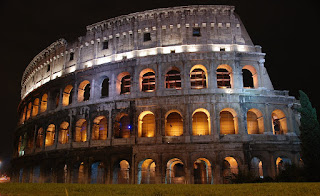
As mentioned previously, we are using the Roma Pass to enter the Colosseum. Coming out of the metro station, the huge Colosseum came into sight. There are quite a huge crowd at the open ground. There are several Italian men dressed in ancient Roman amour where you could take photos with them for a fee; they reminded me of the movie ‘Gladiator’. There are also several guides who approached us and asked if we wanted to join their guided tour. There are two lines of people queuing at the main entrance. Belinda and I decided to first go round the Colosseum to admire the outer structure. Part of the Colosseum is undergoing some maintenance work at the moment. As mentioned previously, we are using the Roma Pass to enter the Colosseum, hence we could skipped the long queue and walk straight to the entrance. First we have to put our bags through an x-ray machine scan and then we need to validate our Roma Pass at the entrance gate to get in.
Inside, it takes a bit of imagination to picture how this ancient arena looks like in its glorious days. What it felt like being a spectator watching the gladiators battling with wild animals or with one another; for glory and for their own lives. The center stage is no longer present, the underground waiting area for the gladiators and the animal captivating area is now visible from the top. However, the authorities have rebuilt a small section of the center stage to help us understand how it would have looked like in the ancient days.
Roman Forum & Palatine Hills
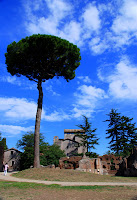
Just next to the Colosseum is the Roman Forum (free admission), set in a valley between the Capitoline and Palatine hills. Throughout the era of the kings, the republic and the empire, the Forum was the political, religious and social centre of the Roman world. Here you need even more imaginations and some knowledge of the Italian history. Otherwise, you will end up like us, seeing rocks after rocks on the vast open ground and not know what we are looking at. With that said, I just walked around and took photos. It’s a good day with clear blue sky making it a perfect background for photo shoot. I would think that this would make a great location for outdoor wedding photos. Legend has it that the Palatine hill was home to the she-wolf who suckled Romulus, mythical founder of Rome, and his brother Remus.
Pantheon
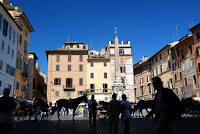
Walking outside of this building we didn’t realized that it was the Pantheon. It’s still a wonder how this 2000 yrs old temple was erected. Its dome is a half-sphere made of poured concrete without the support of vaults, arches and ribs. The oculus in the middle of the dome allows in light and also rain. If you look closely at the pillars outside the entrance, you will notice some slight differences in color and materials used. This interesting fact is pointed out in Bel’s guide book.
Outside the Pantheon is a piazza, where there are several horse cartridges for hire, some Africans touting (fake) branded bags and paintings. Looking out from the front of the Pantheon into the square, the building walls painted in orange, blue sky, black cobbled stones floor, all of these make perfect photo setting.
Piazza Navona
I am quickly attracted to the setting of this piazza as soon as I set foot here. The piazza is rectangular in shape. There are rows of cafes at the side. In the middle of the square are filled with artist and painters drawing and painting while selling their finished art works. At the two ends of the square are 2 fountains where tourists rest their foot and also take memento photos. Here lies the Renaissance architect Bernini’s masterpiece, Fountain dei Quatro Fuimi (Fountain of the Four Rivers), where each of the river god statues represents one of the four continents of the globe: Ganges for Asia, Danube of Europe, Nile for Africa, and Rio de la Plata for the Americas.
Piazza Campo dei Fiori
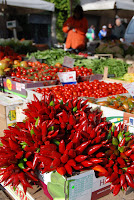
The once execution place during the Inquisition is now home to a bustling flower and vegetable market Monday thru Saturday mornings. In out first attempt, we came a tad too late hence only seeing the cleaners sweeping the floors and clearing the garbage left from the morning market. But we made it the second morning to see this Italian market, which resembles the ‘pasar pagi’ (morning market) that we have in Malaysia. Flowers, fruits, vegetables, fishes, dry groceries and souvenirs, are up for sale. Belinda bought some Murano glass souvenirs here while I as usual just took photos.
Trevi Fountain
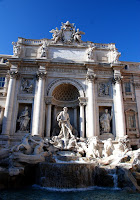
Passing through some narrow alley, following the small signpost, listening to the sound of the gushing fountain water, we arrived at Fontana di Trevi. Be prepared to fight with the other tourists in this forever crowded place in trying to get a good shot of you posing in front of the fountain with minimal interference from other ‘unwanted’ people. Be patience for others to get out of your way and be quick once the coast is clear. The custom is to throw a coin over your shoulder into the fountain to ensure your return to Rome; while a second coin grants a wish. We of course did out part to follow the custom. With every tourist tossing at least a coin into the fountain, you can imagine how much money was accumulated at the bottom of the fountain. Every morning, the authorities will come and collect the money, which will be donated to the charity organizations, which is a pretty good idea. However, Belinda told me that she once saw a documentary show on TV where there are a group of people who came before the authorities and collected most of the money from the pool and made themselves rich. When the show was first broadcast, these people stopped their ‘activities’ for a month or so, but they soon continued their act of stealing the money again.
The Spanish Steps
Designed by an Italian, funded by the French, named for the Spaniards, occupied by the British, and now under the sway of the American ambassador; it has long provided a major gathering place for foreigners and locals alike. We came here after dinner and there are quite a number of people sitting at the steps, chatting, resting, people-watching. It’s quite difficult to take photo under the dim light as I did not have tripod and there weren’t any stands or short poles that I could used as my tripod. There’s a church at the top and while on top, you could actually see the dome of the St. Peter’s basilica from afar.
Villa Borghese
This is a huge park, where the Museo e Galleria Borghese is housed in a 17th century villa, with an extensive and impressive art collection for over 300 years. It’s best to call and make reservation beforehand to ensure entry to the galleria. When you call, the officer will give ask your family name and the time that you wished to visit and then give you a reference number which you need to produce when purchasing the admission ticket. We used the Roma Pass for this. The ticket counter is below the house (basement), but half the queue is lined up outside on the ground. After purchasing the ticket, you need to follow another queue where you are required to store all your belongings (bags, camera, water bottles etc). Nothing are not allowed inside the gallery except your guidebook and your wallet. Upstairs, its up to you how you want to explore the art collections in the rooms. In each room, there are information cards explaining the art pieces in the room.
Colosseum
Inside, it takes a bit of imagination to picture how this ancient arena looks like in its glorious days. What it felt like being a spectator watching the gladiators battling with wild animals or with one another; for glory and for their own lives. The center stage is no longer present, the underground waiting area for the gladiators and the animal captivating area is now visible from the top. However, the authorities have rebuilt a small section of the center stage to help us understand how it would have looked like in the ancient days.
Roman Forum & Palatine Hills
Pantheon
Outside the Pantheon is a piazza, where there are several horse cartridges for hire, some Africans touting (fake) branded bags and paintings. Looking out from the front of the Pantheon into the square, the building walls painted in orange, blue sky, black cobbled stones floor, all of these make perfect photo setting.
Piazza Navona
Piazza Campo dei Fiori
Trevi Fountain
The Spanish Steps
Villa Borghese
This is a huge park, where the Museo e Galleria Borghese is housed in a 17th century villa, with an extensive and impressive art collection for over 300 years. It’s best to call and make reservation beforehand to ensure entry to the galleria. When you call, the officer will give ask your family name and the time that you wished to visit and then give you a reference number which you need to produce when purchasing the admission ticket. We used the Roma Pass for this. The ticket counter is below the house (basement), but half the queue is lined up outside on the ground. After purchasing the ticket, you need to follow another queue where you are required to store all your belongings (bags, camera, water bottles etc). Nothing are not allowed inside the gallery except your guidebook and your wallet. Upstairs, its up to you how you want to explore the art collections in the rooms. In each room, there are information cards explaining the art pieces in the room.
Subscribe to:
Posts (Atom)